Hello world!
Welcome to Astra Starter Templates. This is your first post. Edit or delete it, then start blogging!
Welcome to Astra Starter Templates. This is your first post. Edit or delete it, then start blogging!
The views and opinions expressed in these posts are those of the author(s) and do not necessarily reflect the official policy or position of the Epidermoid Brain Tumor Society.
Any content provided by our author(s) are of their own opinion and are not intended to give medical advice or instruction, nor to malign any religion, ethnic group, club, organization, company, individual, anyone or anything.
 After getting through over a year of this virus (which included seclusion from everything we know and love) we are starting to return to a sense of normalcy: seeing loved ones, giving hugs, eating out, gathering with others.
This pandemic has stopped us from doing everything we once took for granted. Ironically, the last time we dealt with a global pandemic, over 100 years ago, our tools to fight it were largely the same: socially distance from others and wash your hands frequently (although an mRNA vaccine wasn’t developed at break neck speeds then). We are now able to begin returning to doing what we love. Unfortunately, this is a cautionary article, reminding us that while the finish line is in sight, we are not out of the woods yet (sorry for using multiple metaphors). As a physician, I fear that we may undergo yet another surge in large part due to this Delta Variant.
I completely understand, we ALL want this pandemic to be over, developing COVID fatigue. But I urge you to help us cross that finish line – continue to mask and socially distance when possible. As a physician I also must urge you to get vaccinated. Suffering from Epidermoid brain tumors puts many of us at elevated risk, thus even further emphasizing the importance of getting the vaccine. When coming up with a treatment plan for patients, I try to avoid the angle of “scaring” them into treatment, as I strongly believe that playing on a patient’s fear and vulnerability not only is a poor tactic, but also only leads to fleeting results. But regardless of this philosophy, I feel I must share this story with you: (In an attempt to respect his/her privacy I will not give out any of his/her identifying information)
My wife (also a Family Physician) had a patient who she constantly urged to receive the vaccine. The patient always refused, stating that he’ll/she’ll “be fine without it.” She saw him/her on a Monday afternoon and again pushed for vaccination – this person again refused. Two months later she received a note telling her that this patient had been hospitalized with COVID. Ten days after that she received a notice that he/she had unfortunately passed away from COVID complications. I share this sad story with you, not to scare you, but to underscore the importance of this vaccine. Had this person received the vaccine, his/her life could have been spared.
Thus, I implore you to stay vigilant. Keep washing your hands, continue to try to socially distance, and get vaccinated. We are so close to the finish line, but I fear yet another surge is on the horizon.
Thanks guys!
Chris
In this uncertain, unprecedented time it would be easy to see all of the negative, disastrous effects of COVID-19, but what is not seen and needs to be addressed is all the positive that may come from this. I do not want to come across as callous; I do see the numerous harmful aspects of this – besides the obvious detrimental health effects, I believe the recent economic downturn is only the tip of the iceberg, but I do not want to focus on this, instead I hope to turn my focus instead to possible upsides – a true ‘glass is half full’ exercise.
 Our sanitary habits will improve.
I, like many Americans, I’m sure, never gave a second thought to simple actions like washing my hands or avoiding contact with my face, eyes, or mouth. Before, while I would always wash my hands after using the bathroom or before cooking, I would rarely, if ever, get up in the middle of the day to randomly wash my hands. I also avoided use of waterless hand sanitizers as I feared they would ‘dry out’ my hands. I hope and believe that our sanitary habits will forever change for the better when this disease is long gone.
Our appreciation of those in the healthcare field has grown.
I realize that me, a physician, touting this as a benefit creates a conflict of interest. But even from the outside looking in, I have to believe our view of healthcare professionals has changed. I just watched a moving video of a city in Spain cheering for healthcare workers at their shift change: https://www.youtube.com/watch?v=5MIjynl6nYc&feature=youtu.be. People in the healthcare field are on the front lines, putting their health in harm’s way for ours, this pandemic has shown us this.
We get to spend more time with our kids.
I know that many of you do not have children, but for those of you who do, in this ugly mess of Coronavirus, we might one day look back and think of this time as a the most time we have had the chance to spend with our kids. I know many of you may be pulling your hair out thinking, “more time with my kids is good, but this is TOO much time!” I have had those moments, too, as I have two boys at home (ages six and 13). Besides finding out that seventh grade math is hard, I have come to cherish this time I get to spend with them. Never before would I have thought that I would be spending an entire Saturday morning with my family, putting together Legos.

The elderly were often a forgotten demographic, no more.
While the statistics tell us that this disease can afflict ANYONE at any age, the elderly, especially those with concurrent medical conditions, seem to be more adversely affected than other age groups. The elderly population is often neglected, but this virus has highlighted this population. Ever since this began, I have called my parents every day to ‘check in’. When the proverbial smoke clears, this demographic will be forever remembered.
Public health is a thing!
Before this, to me, public health was simply a topic that many would-be physicians took after college in their graduate studies. Now, as a doctor, while treating the individual, I find myself thinking of the health effects to the public – Public health! You do not have to be a physician to think this way – we have all become mini public health experts since this began and I hope this continues long after Covid 19; for in every action we take, besides thinking of the consequences to us as individuals, we ought to also consider ramifications to everyone else.

We are together.
This is perhaps the most important positive outcome from this crisis. As a nation we are more divided than ever. If someone thinks up, someone else thinks down, and inevitably an argument breaks out between the ‘uppers’ and ‘downers’. But with this disease we realize that while we may disagree on just about everything, we are one. Perhaps it took such a drastic event to realize this.
I’d like to reiterate that I do see the direness of this situation. I do not want to come across as callous or daft to this crisis we are in. I simply hope to shed some brightness in your day, after being reminded time after time of soul draining topics like the ever growing death toll. I am sure there are many positive aspects of this I forgot. Please comment on the EBTS Facebook group page and let me know what I forgot.
Calmer heads prevail. I have lived my life by this saying. In times of crises this seems to hold true, now more than ever. It seems as if every time I pick up my phone a new news flash pops up, “Death Toll in the Thousands,” or “Colleges Go to Online Lectures,” or even “NCAA Basketball Tournament Canceled.” In times like this it is important to try and keep a level head. There are aspects we CAN control (hand washing, face touching, etc.) but also some aspects are out of our control (for example: death toll, vectors of how it’s spread, countries it is prevalent in.) In the face of such adversity it is vitally important that we keep a level head. Yes, the situation is crappy, but I can assure you that constantly worrying about it does not help. I liken the situation to trying to hold your breath under water: the person with their heads calmly submerged is going to last longer than someone who is thrashing about under the surface.

As I said in the beginning of this piece, it is important to realize that with this virus, there are aspects of it we can and cannot control – but there are also aspects we can control – diligent hand washing, no face touching, and social distancing. One of these under our control that is never mentioned is our reaction – does fighting over toilet paper really help or would keeping a level head amidst this crisis be a better and more productive reaction?
As a medical professional, the adverse effects of such a mass panic become more tangible, manifesting as lack of staff, lack of equipment, and lack of supplies. I realize that this and many of my other posts may come across as preachy, but I am by no means downplaying this dire situation, I am simply imploring you to remember that a sense of calm can help in this adversity.
I must warn you before you read on, that all I am about to say, you have heard before. At some point in your lives, someone has told you “it’s not about the problems you face, but how you face them.” This piece is going to be no different, the main thrust of this piece is that we will all will have some problem or obstacle put in front of you; however it is not the problem that defines you, what is important is how you react to it.
Problems face many of us, some on an almost daily basis. These obstacles come in different shapes and sizes: for many of you reading this, you have been diagnosed with an Epidermoid Brain Tumor, for others maybe your favorite shirt got a stain on it – different shapes and sizes. But while the problems themselves may vary, the underlying principle remains: the issue you face is not as important as how you pass this obstacle.
Allow me to give you my personal example: in 2013, I was diagnosed with a golf ball sized Epidermoid Tumor along my brain stem. A 16 hour surgery to remove it followed by a one month stay in the hospital was required. Before the surgery, I was very active, playing tennis and various other sports. I was also in the midst of my medical residency, training to become a Family Physician. However, the tumor and its removal left me using a cane to walk with my motor skills seriously diminished – obstacle. Instead of obsessing on what I cannot do, I focus on what this tumor has given me – like time with my family I didn’t have before or a chance to share my thoughts with you in this great group – obstacle passed. I am by no means infallible and find myself sometimes thinking of what this tumor has stripped from me but thankfully these thoughts are becoming more and more sparse.
Thus, when you are faced with any obstacle, remember it is not the obstacle itself but how you conquer it. Years from now, when you think back to the time you were diagnosed with an Epidermoid Brain Tumor, you will not think about how you were diagnosed as much as how you dealt with it.
What makes us human? After all, we are often reminded that our DNA differs from chimpanzees by only 1%. Thus why is it while they are swinging from trees we are accomplishing feats like creating beautiful art, or bring technology to uncharted areas? There are notable physical differences, like an opposable thumb or our larger, more developed brain, but our differences run far beyond the physical. As a human race, we have the ability to adapt like no other. This ability to adapt has moved our race forward, and can move you forward on a day to day basis.
If you study our history, even crudely, you will come across countless examples of us adapting: in our humble beginnings food was scarce and dangerous to catch: thus we developed ways to make this process easier- we began to hunt in packs, we developed weapons to more easily hunt our prey. To be able to live in even the most frigid of conditions, we made warm clothing that allowed us to survive. More recently, to satisfy our insatiable need for accessible information, the internet was created. Now, if I were thinking, “I wonder when William Shakespeare was born?” the advent of the internet and our ability to adapt has made it possible for me to type “Shakespeare birthday” into my internet search engine and have the answer in seconds.[1] As a human race we have an uncanny ability to adapt. Even if the rules change we can (and will) master any game.
This idea of being adaptable need not only  apply to the whole of the human race though; if applied to our daily lives, we can enrich ourselves as individuals. I realize this is an abstract concept, so allow me to give you a more concrete and personal example: I attended college and went to school to obtain a medical degree. I trained as a medical resident in Family Practice. I currently hold a Medical License in Michigan. I tell you this only because I am hoping to make it clear that my life was geared toward working. Then, in March of 2013 I was diagnosed with a brain tumor that brought my plans to work to a screeching halt. Given this abrupt change, it would have been easy to throw my hands up and surrender; however embedded in my genes (as well as in the genes of every single human being) was a trait that implored me to adapt. The field goal posts might have moved but I still wanted to play the game. Even though I was on a path to opening my own practice, now with the curve-ball life has thrown me I still use my medical knowledge for the benefit of others. I ask you to do the same: adapt. As a human race we have adapted to progress; as individuals we can change to further our lives. I will leave you with a quote from Bruce Lee, “Empty your mind, be formless. Shapeless, like water. If you put water into a cup, it becomes the cup. You put water into a bottle and it becomes the bottle. You put it in a teapot, it becomes the teapot. Now, water can flow or it can crash. Be water, my friend.”[2]
[1] He was born on April 23, 1564 by the way.
https://www.history.com/this-day-in-history/birth-and-death-of-william-shakespeare-celebrated
Let’s do a thought experiment together: Let’s take a middle aged woman and for one year everyone she encountered told her that they saw a unicorn that day. Her dad would slip in a casual, “did you see what that unicorn did?”, in conversation. Even kids would ask their parents, “mommy, did you see that unicorn at the zoo?” (At the exact moment this person is walking by; at the exact right sound level for her to overhear). My guess is that the year would start with this person wondering why the hell is everyone saying they saw a unicorn? Is that a euphemism for something else?
Then, after a month, doubt would start to creep in. Unicorns are fake right? She might google “unicorn” to make sure (according to the first hit, Wikipedia, “The unicorn is a legendary creature that has been described since antiquity as a beast with a single large, pointed, spiraling horn projecting from its forehead.”)[1] Ok, why did it say ‘legendary’ and not ‘mythological’? Does legendary mean it never existed?After six months, she would seriously question her previously held belief that unicorns never existed. Maybe a trip to the local library to research unicorns takes place. Instead of just brushing off her dad, and ignoring his ‘unicorn comment’, she might ask him about it. At the year mark, my bet is that a significant percentage of these (hypothetical) subjects would in fact believe in unicorns.

Even if one out of 1000 were converted into unicorn believers (or ‘unicorners’ as we in the know say) then the hypothesis of the experiment is proven. I used a middle aged person to emphasize the fact that they previously held solid beliefs that unicorns were mythological (and legendary). However, through external forces, this belief was put into question. But it is not until these external forces are internalized that doubt starts to creep in. Finally, it is not until internalization is complete that this person begins to believe in unicorns.
The point of this experiment is not to highlight the gullibility of some of these subjects, but to portray the power of human thought. We have all heard of the cliché power of thought (from Socrates to pop culture in movies like Inception), but this experiment proves the limitless power that it truly has. A creature that we all know does not exist, through thought and persuasion, reversed a strongly held belief. Thus, we can convince ourselves that bad luck only happens to us, or we can harness the power that made our subject think that unicorns are real, and believe in our abilities. If a person is faced with any situation or obstacle, there are countless ways they can react to it. Use the power of your thought to react in a beneficial way. In this age of superheroes, little did we know that we each had a superpower within us. Maybe unicorns are real.
[1] https://en.wikipedia.org/wiki/Unicorn
I recently had the thought, “I wish I could do that”. I then realized how counterproductive it was for me to think this way. We all have fleeting thoughts of objects or abilities we wished we had; those we cannot avoid, but when these thoughts become more than fleeting, even consuming, that is when we must remember to focus on what we have and can do, rather than on what we cannot.
 Even though the premise of this message seems straight-forward, it is one that is often forgotten. We all wish we had more money; maybe you wish you wish you were taller, or had different color hair. Perhaps you desire more power at your job. We all wish and hope for different possessions and talents, but we cannot let these desires consume and overtake us. Instead, we should be grateful for what we do have and can do. Personally, I mentioned earlier how I wished I could do that; my 4 year old son had just asked me to play catch with him. I knew my poor motor skills would not allow me to do so, so it was at that time I wished I could do that. Thankfully though, that only lasted a minute, as I have not had thought again. . . Until now. But my point is, that if I allowed these thoughts to consume me I’d either go crazy or sink into depression (or both); I think it’s important instead to hone in on what I can do instead.
Many people, much smarter than me, postulate that our minds are like basins being filled with water that are our thoughts and emotions. Thus, according to this theory, that Pythagorean Theory we learned back middle school (you remember it, right?), takes up some space in the storage of our minds. Some facts might be hidden deeper in there and tougher to find, like counting to ten in a foreign language, but they’re in there. It just might take some time for you to fish them out. Thus, why fill this precious space with useless thoughts of what you do not have or cannot do?
Yes, at the core this is a piece about optimism; I am simply telling you what you already knew: be optimistic, not pessimistic. But if this message is so simple, why is it so often forgotten? Studies show that optimists succeed more than pessimists. This makes sense when faced with a problem; while a pessimist would fold and surrender early to let it go and deem the problem unsolvable, an optimist would instead find a way to solve it with the tools he/she has. Thus, my last 445 words to you can be boiled down to one straight-forward message: be an optimist, not a pessimist.
Please know that the reason I devoted a whole article to this thought is that it is an important one.
As the saying goes, “a few bad apples can spoil the bunch.” The underlying idea is that you can have a basket of crunchy, delicious apples, but the mere presence of a rotten one can ruin all of them. The aftermath of the shootings in Las Vegas and Texas had me constantly harping back to this saying.
“Why?” you may wonder. After devastating events like these, when I turn on the television, or pick up a newspaper, I am bombarded with notions like ‘these events signaling the demise of our culture’. While for me, my first thought was for the families of the victims of these horrific events and how another human being could commit such horrific acts.

But then I thought more, as sappy as it may sound, human beings are beautiful and while these isolated horrible events may skew our outlook, I implore you to see through this fog to humanity. Don’t let some ‘bad apples ruin the batch’.
During this time you may hear people from the left or right claim that this is either a gun control or mental health issue, but do not forget that these are the same people who gave such wondrous gifts as human flight, or produced moving words such as, “to be or not to be: that is the question.”[1]
I, by no means, wish to belittle the tragic events from these past several months, but I do hope to remind everyone reading this that while some people may commit some ugly and heinous acts, this is the same species that gave us poetry and music.
With this being the holiday season, our thoughts on who and what to give ‘thanks’ to is part of the tradition; for me, amidst all these horrific events, I will (counter-intuitively) give thanks to the 7.6 billion people living on this planet (minus 2). These accomplishments and feats are so numerous that me giving you specific examples here would be fruitless. Yes, these horrific events tell us that change must be undertaken. What that change is, is up to you.
But do not let the few ‘bad apples’ we witnessed in Las Vegas and Texas ruin our appreciation for the batch of humanity.
[1] Shakespeare, Hamlet
I was diagnosed with a brain tumor in 2013, right in the middle of my medical residency. Before that, I was just going through the motions, making sure I saw enough patients to reach my numbers, graduate, and practice on my own. But on March 13, 2013, my view of medicine changed drastically—and I owe it all to love.
Love diagnosed me, treated me, helped me through the hospitalization, and aids in my recovery to this day. In short, love saved my life. On that day in 2013 when I developed double vision, a prominent, local neurologist obtained the MRI and laboratory work that gave me a diagnosis. Unlike me, he wasn’t merely going through the motions. He loved his craft and it was because of this love that I was diagnosed.
When I needed surgery, the neurologist consulted with a neurosurgeon who performed the 16-hour surgery. What possesses someone to operate for 16 hours? What drove him to wake up every morning before the sun rises to visit me? Only love of his art could motivate him, I believe.
In my initial post-operative phase, I was in the ICU for one week, followed by a month-long stay on the general floor where I received dozens of visitors, including my primary care physician; a rehabilitation doctor; speech, occupational, and physical therapists; a neurologist; an ophthalmologist, and a neuropsychologist.
Many of these visits, especially from the physical therapist, were frustrating. Saying words like bumblebee, or putting pegs in a board did not thrill me. Many times I wanted to skip these appointments, but the love of my wife and two sons always urged me on.
It was the love of my friends that reminded me that I would get better. It was their love that gave me the hope I needed. Now, when I am doing balance exercises at the gym, I close my eyes and picture my friends and family. Their love makes me do that extra exercise; they are the reason I try to recover.
My words may sound cliché, but no matter how I spin it, I can’t get around the fact that love has been the driving force behind this whole journey, from diagnosis to recovery.
As a physician, I hope to use this love in all my encounters. The days of going through the motions are behind me. I realize it is unrealistic to love every one of my future patients. Instead, I will love the art of medicine and the fact that I am fortunate enough to be in a position to help people.
 Christopher Chiou, MD, practices family medicine in Okemos, MI, where he lives with his wife, who is also a doctor, and two sons. He has recently begun writing about health in various journals.
If you are looking for a profound article describing the meaning of life, then read no further, this is not that kind of article. I was just reminded recently about the idea of supplements. In fact, one of the EBTS members, Andrew Walker, recently posted, “A nutritionist suggested some supplements to support [the] brain…” Now before I go on, you might finish this article and think, jeez, does Chris not like supplements? I want to answer that right from the onset; my response is a little complex, but ultimately the answer is, “I do not know.” Let me explain:
 In medicine, we are trained to be weary of dietary supplements. The idea behind this is that these supplements are not researched and approved by the FDA. This does not mean that they are disapproved, it simply means that that particular drug or dietary aid has not been studied. Numerous supplements like multi-vitamins, glucosamine chondroitin, and melatonin, I actually encourage my patients to take. While these have not been approved by the FDA, they have stood the test of time. However, for every one of these effective remedies, many more questionable ones exist. My mind cannot go away from e-cigarettes when mentioning this. I know they are not technically a supplement, but many of the ideas are the same. While, the idea of replacing a ‘regular’ cigarette with a device that delivers nicotine in a different way is a good thought, the problem is that we have absolutely no idea what is in them. For all we know, e-cigarettes could contain trace amounts of rat poison. Or it could contain some magical compound that stops smoking. The point is that we have no clue what is in e-cigarettes or supplements; they lack the research needed to know their contents or effectiveness.
 So, in the end, my thoughts on supplements is one of uncertainty. I have been fortunate enough to be on both sides of the conversation: I have both suggested and been advised to take a certain supplement.
My only advice to you is to be your own FDA, and research and study what you are considering to put in your body. Part of that research may include asking your physician, in hopes that he/she also has studied the supplement in question and can share their findings and thoughts with you. Your research may include posing a question to a group like the EBTS (like Andrew).
 For this month, Brain Tumor Awareness Month, I am writing about the issue of awareness and what it truly means to be aware.
The month of May is Brain Tumor Awareness Month, which is one of many months in our society. We have Black History Month, Breast Cancer Month, and LGBT Month, among others.
But what does it mean to be truly aware? I think, too often the reaction to hearing of this month’s observance is, “Really? Interesting.” (In a flippant manner). Or if someone wants to go a step further, the response may be, “Cool! I know someone with Breast Cancer”, or “I know someone Brain Cancer.” But is that true awareness? Is that what is meant when a whole month is devoted to the subject?
I must admit that in medical school, Brain Tumors was a topic that was only taught as part of another topic with maybe 10 minutes of lecture time devoted to the condition. We were taught of only the most deadly Brain Tumor Cancers, numbering maybe 15 afflictions. Prior to my surgery, I had never heard of Epidermoid Brain Tumors. I’m sure Neurology or Neurosurgical specialties study them more in-depth, but even in medical school we did not learn about Brain Tumors in much detail.
Merriam-Webster defines aware as having or showing realization, perception, or knowledge. Simply knowing of Brain Tumor’s existence does not fulfill this definition.
To do this month justice, we ought to delve deeper. For me, this means learning about more than the 15 Brain Tumors taught in my medical school. For many of us in this group, we either have a loved one with an Epidermoid Brain Tumor, or have been diagnosed personally with an Epidermoid Brain Tumor. But I contend that we should take this a step further and try to learn more of Brain Tumors. Take 10 minutes out of your day to read an informative article on the topic. Even though I have been afflicted with a Brain Tumor myself, I am going to devote more time to learning of the condition and its vast implications. But learning of the scientific facts of the condition is not enough; as I mentioned earlier, most of you are incredibly privileged to be, or have someone in your life with this disease, knowing about a topic is more than knowing the facts of it; broaden your knowledge by feeling the experience: ask someone you know about their condition and how it affects their life.
This month, I urge you to take time to learn more. This way, when someone says to you, “Did you know it is Brain Tumor Awareness Month?”, while your reply might be a passing, “yeah”, now you will be more informed.
My hope is that this month does not become a mere side note, but an event that makes you change your realization, perception, and knowledge of the topic.
 Fear is defined by Merriam Webster as to be afraid or apprehensive.[1] But while we know how to define fear, where does it come from? The question of fear and its basis is an important one. But when I thought of it more, the answer became clear: we fear what we do not understand.
One only needs to look at countless examples from our history to see this: before the Wright brothers mastered the art of flight, flying was seen as not only an impossible endeavor, but also one that ensured death; before 1968 it was seen as ludicrous to even attempt an unconventional method for high jumping. Then came along a man by the name of Dick Fosbury who revolutionized the high jump on the way to winning a Gold Medal.[2] My point is that difference can lead to a lack of understanding, which begets fear.
I have experienced much of this in my own life: growing up Asian in a primarily white neighborhood led to some (but not many) misunderstandings and fear. I played tennis growing up and was once asked by an opposing team member, “how I could possibly see the court with my slanted eyes?” This lack of understanding is amplified now with my current condition as most who come across me are unsure what (or what not) to assume.
For you, does being told that you (or a loved one) have a ‘brain tumor’ scare you? Perhaps it’s because all we know is that brain tumor = bad. Maybe if we better understood them our fears would be lessened. I remember when I received my diagnosis, I was scared; a flood of questions came to my mind: What is an Epidermoid Tumor? How is it treated? Does it require surgery? How long have I had it? I could list the countless number of questions that came to mind, but the point is not the number of questions, the point is that I was asking myself these questions, a sign of my lack of understanding, which led to my fear.
Thus, in the future, when you find yourself anxiety-ridden over an upcoming (or past) event or happening, try to turn this fear into inquisition, to broaden your understanding. Hopefully, this will help to quell your angst.
 At this time of the year, with January 1st here, I feel it is both an appropriate and vital time to think about what it means to reflect. If you were to ask a 10 year old what reflection is, they might say it is the image produced when you look into a mirror (or glass or still water). The truth is that (besides that being one of the definitions of the word) they would not be too far from what I discuss here; when I think about reflection, I do not think about a physical image that is produced when looking on a certain material, but a less tangible ideal where our past actions and occurrences are pondered. The thought of a physical image that details how we look upon an object (whether it be a mirror or a window) does not stray too far from this existential meaning; in both one sees oneself in their true form.
When I think back to this year, I recall the countless interactions I had; from the cashier at a local grocery store to ones with my close friends. I know what I meant by my actions and words, but were they received differently, I ponder. How has my diagnosis of an Epidermoid Brain Tumor affect my life? Even though the diagnosis and subsequent surgery was back in 2013, I still often wonder questions about it. While I am also thankful that I am able to write for you through the EBTS, I often ask myself if the topics of my pieces are appropriate ones: would different topics be a better read for you? You’ll find that this process of reflection often generates more questions. Don’t let this discourage you, this process should create questions. The art of reflection is a process, not a magic trick, where you instantaneously emerge an improved human being; asking questions is not only an initial step, but also one that happens in the middle of it.
Reflection is how we grow. If Steve Jobs did not reflect on his past successes and failures, would the Apple technology be where it is today? If Albert Einstein simply accepted a half-hearted Theory of Relativity, this concept would likely be a lost one today. The point is not that reflection will always produce an iPhone, or time-space continuum theories, but that reflection is crucial for our progression, as both a human race and individually as people.
So during this time of year, take some time to pause and reflect on your past; whether it be a new brain tumor diagnosis, or perhaps a short interaction with an acquaintance, take time to ask yourself, ‘how did this affect me? Could I have handled it differently? Have I or the people around me changed because of it?’
The art of reflection is an important one that is vital to both us as individuals and the human race as a whole. Use this time of year to reflect. Most importantly, have a safe and Happy New Year!
I recently saw a great movie (titled ‘Race”) and one scene from it really struck me and persisted in my mind. Let me describe the scene to you: it is a movie about the track and field athlete Jesse Owens. Near the beginning of the movie Jesse is in college in the middle of a training session with the football team watching. One of these players makes a racist comment towards Jesse, clearly flustering him. The track coach notices this and in the next scene confronts Jesse about this. However, while confronting Jesse about this he deliberately riles up the football team and coach, in an effort to teach Jesse a lesson on the importance of focus; there is a poignant moment where all the football players are yelling, while the coach implores Jesse to focus on him, that “All of this is just noise. You are going to hear a lot of this in the years to come, you need to learn to block it out and focus!” The scene ends with Jesse focusing on his coach while successfully blocking out the other ‘distractions’. To make this point clear, the football players and coach can be seen yelling while no sound comes from their mouths.
This made me think of the concept of noise. This is not a new concept as many writers have referred to the idea of noise and the importance of shutting out noise in an effort to focus on the task at hand. Since my surgery the importance of being able to focus on the task at hand while blocking out all other ‘noise’ has become even more relevant. I find that the more I try to multitask the more mistakes that occur. I have learned that instead of trying to accomplish too much at once, it is better to get one task done well rather than two or three done shoddily. In sport this is easier, as the ‘noise’ is usually more tangible: whether it be crowd ‘input’, or your opponent is attempting to throw you off your game by ‘talking trash’. Don’t get me wrong, blocking out this noise can be difficult. I am simply saying that in sport, identifying this ‘noise’ is easier. But this isn’t only relevant to sports, it is applicable to life in general. Many of us have been diagnosed with a brain tumor showing us the fragile nature of our minds. I implore you to put your efforts into one goal, instead of being distracted by “noise.” Forget about that noise, it can only serve to distract you and delay you from your goals.
Because today is a day we honor our mothers, I have done much thinking about the importance of loved ones like our mothers and the importance of having a day like this; yes, the cynical side of me thought this is an artificial holiday created by card and flower companies in a ruse to make money. Then I realized so what if it’s a contrived holiday? Does my mind’s perceived origins of it mean that its aim is disingenuous? The answer is no; the holiday may fall on the second Sunday for arbitrary and questionable reasons, but we embrace it because mothers truly do deserve a holiday to recognize all they do for us.
In my life, I am lucky enough to have 2 mother figures. The first is my actual mother (a true red if you read my last piece), and I also have my wife, the mother of our 2 sons. (I failed to include my older sister in to this group as she is a mother of three). Each of these figures brighten my life, albeit in different ways. My mom only wants what is best for me, and will stop at nothing to make sure I receive the best of everything. I hate to use the term ‘Tiger mom’, but this is a woman who practiced as an Emergency Department physician and put her children through Yale, Harvard, and Tufts. Not only that, but she encouraged and supported my sister and me in our paths to medicine, with my older sister being an Emergency Department physician and me being a Family Practice doctor. She also wholeheartedly supported my younger sister’s less “conventional” choice of working in the financial sector. As hard as I may try not to call her a ‘Tiger mom”, this perfectly describes her.
My wife is different; she is more passive than my mother; but don’t be mistaken, this passiveness does not mean she has accomplished any less in her life. She graduated with a degree in Psychology from Harvard, and now practices as a Family Physician in Michigan and somehow manages to be an amazing mother while working on a full-time basis. Their mothering styles are different; the best example I can give is that if something were standing in the way of what either I or my sons needed, my mom would have no problem stepping on some toes to get what was needed. My wife, on the other hand, would make sure not to step on anyone’s toes but would still succeed at obtaining what was needed. Neither way is better, actually in both cases they get what they desire. I realized in thinking of the importance of them in my life that a day devoted to their appreciation is not enough. If I could I’d treat every day as if it were Mother’s Day to thank them for everything they do.
 But this is only the brief description of my story and the importance these mother figures play in my life. There are almost 7.5 billion people on this planet; and every one of them has or had a mother. So my story, and the importance of the mother figures in my life is one of 7.5 billion. So call your mother today and tell her 2 things:
1. How much you love her
2. How lucky you are to have her in your life
Hi everyone! I wanted to thank you all for being patient with me during my hiatus. It has been many months since I last wrote an article for you.
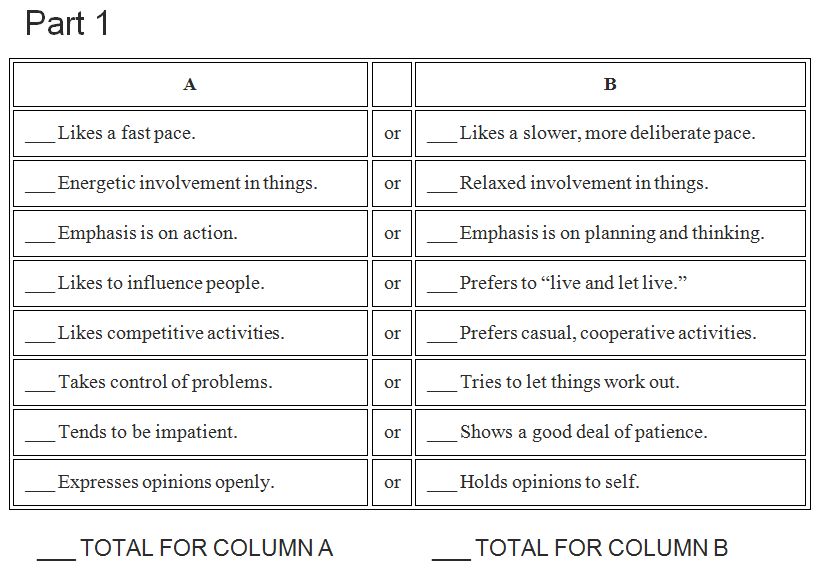
 One of the reasons I have not produced anything for you is that for the past several months I have been back in the clinic seeing patients, completing a portion of my family medicine residency training. As part of this training, once a month we have a 2½ hour seminar as part of our behavioral medicine curriculum. During this time we discuss a wide array of topics ranging from bipolar disorder to child abuse, all with the aim of improving our communication skills, and hopefully help us become more empathic physicians. One of the past sessions we were treated to a fascinating lecture on a less well known personality classification scheme. Most of us have heard of the Myers – Briggs test, where after an extensive set of questions, spanning many hours, you are given a set of 4 letters denoting your personality type. For example, you might be told that you are an ‘ESTJ’ meaning you are an Extrovert, Sensing, Thinking, and Judgment type. While I think this can be a helpful schema, my issue with it is the time required to take the test. During our session, rather than the Myers-Briggs test, we were given a different and much shorter personality test (it literally took me 7 minutes to complete) and based on the results were given a color that matched your personality type. I have included a copy of this questionnaire below, I encourage you to try it:
Personal Style Inventory
Robert W. Russell, Portland, Oregon
Used by permission
Each line below lists two contrasting traits. Your task is to divide seven points between the two statements on each line to reflect the balance of how each best describes you. Points may be divided in any way you wish, but both sides together must add up to seven. Give high points to the description that describes you well, while giving the other side low points. Do the same on each line for Part 1 and Part 2. For example, people who see themselves as quick in the way they handle things might fill out the first line like this:
************************************************************************
5 Likes a fast pace. or 2 Likes a slower, more deliberate pace
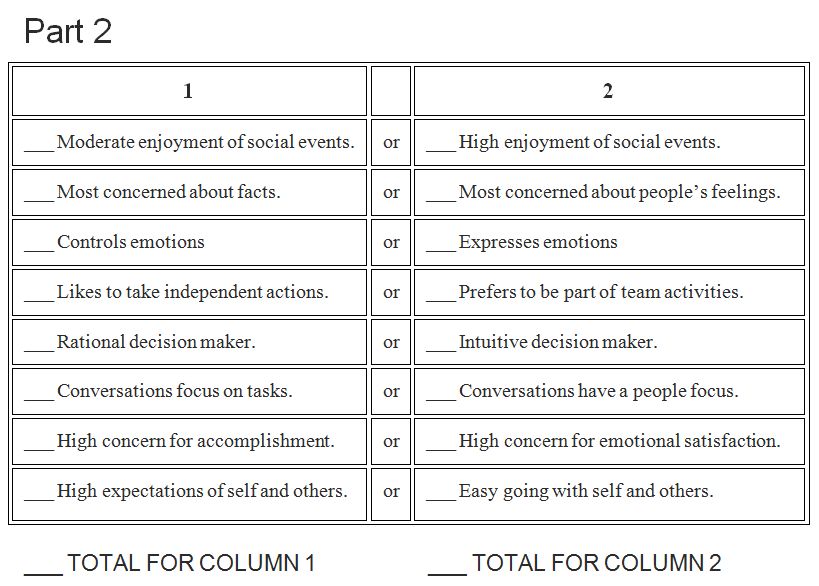
Scoring Instructions
Add up the total number of points for each column (A, B, 1, 2). the columns (A/B and 1/2) with the highest points determine your color. For example:
A ‘red’ is a very assertive person, a type A personality.
A ‘green’ is very task oriented, they are the thinkers.
A ‘blue’ is very compassionate and detail oriented.
A ‘yellow’ is more of an introvert, and always follows the rules.
I have also included a copy of the interpretation sheet and what the various colors mean:
The Four Basic Styles
A-1 RED
TASK ORIENTED. FOCUSED ON RESULTS. EXERTS STRONG INFLUENCE IN GETTING THINGS DONE. ASSERTIVE IN EXPRESSION OF IDEAS. PREFERS BEING IN CHARGE. HAS STRONG OPINIONS.
COMMON STRENGTHS: Determined, decision maker, efficient, gets results, direct, takes charge, responsible, leadership qualities, risk taker, alert to opportunities, challenging limitations.
POTENTIAL WEAKNESSES: Dominating, unsympathetic, demanding, critical, superior, harsh, impatient, dictatorial.
A-2 BLUE
PEOPLE ORIENTED, EXPRESSES OPINIONS AND EMOTIONS EASILY. IS VERY ACTIVE AND MOVES AT A LIVELY PACE. PREFERS STRONG INTERACTION WITH PEIOPLE. USUALLY HAS MANY INTERESTS. TENDS TO BE IMAGE CONSCIOUS.
COMMON STRENGTHS: Personable, stimulating, enthusiastic, dramatic, inspiring, innovative, articulate, concern for the welfare of others. Looks for ways to be helpful, friendly, tries to avoid being a burden to others, warmhearted.
POTENTIAL WEAKNESSES: Opinionated, excitable, phony, flighty, reactionary, exaggerates, showoff, pushover, bleeding hearts, doormats, too social.
B-1 GREEN
DATA ORIENTED, LIKES THINGS TO BE WELL ORGANIZED AND THOUGHT OUT. PREFERS SPECIFIC PROJECTS AND ACTIVITIES THAT CAN BE SYSTEMATICALLY WORKED ON. ENJOYS PUTTING STRUCTURE TO IDEAS. THOROUGH AND CAREFUL ABOUT DETAILS.
COMMON STRENGTHS: Industrious, persistent, serious, vigilant, orderly, rational, methodical, factual, thorough, planners, thinkers, analyzers.
POTENTIAL WEAKNESSES: Indecisive, picky, withdrawn, data-bound, uncommunicative, critical, unsympathetic, analysis-paralysis.
B-2 YELLOW
SUPPORT ORIENTED. STAYS OUT OF THE LIMELIGHT. LIKES BEING PART OF CORDIAL AND FRIENDLY GROUPS. HIGH CONCERN FOR GOOD RELATIONSHIPS. SEEKS STABILITY AND PREDICTABILITY.
COMMON STRENGTHS: Flexible, cooperative, supportive, friendly, willing, dependable, personable, sincere, helpful, team player.
POTENTIAL WEAKNESSES: Conforming, retiring, overly sensitive, dependent, unpredictable, wishy-washy, hides true feelings, sarcastic, chameleon, the “company man/woman”.
Personally, before this lecture I despised personality tests; I hated the idea of being labeled and I also frequently find flaws in their findings. Yes, that’s true about me I will think, but this is definitely not like me. This test was different though, while yes it did label me as a certain personality, it was also incredibly accurate. Every bullet point that described my personality, my ‘color’ was true.
But what was the purpose of this test? For us, it helped us better understand ourselves and others, and hopefully will aid us in our interactions with colleagues and patients. But why should that exclusively help physicians? All of us have our color, knowing it will not only help us become more self-aware people, but it will also help us better understand others and where they are coming from. For us, even though we share the commonality of either suffering from Epidermoid Tumors or having a loved one afflicted with the condition, we are all individuals, different people with different personalities. It is impossible for any personality test to be 100% accurate, they are simply aimed at classifying your personality with few errors. For me the accuracy of this test was striking, with such little preparation time. More importantly, it highlighted to me the importance of self-awareness and how all of our interactions with others can be made better with this understanding. Take the test, find out what color you are. What color would you label your loved ones? Are there certain colors you are drawn to? For me, I turned out to be a ‘yellow’ with my wife being ‘green’. But I realized that a team filled with either yellows or reds would not make an effective team – you need diversity in colors to make a good team. Tell me what color you are, and what color your loved ones are.
In reflecting on my experience with this tumor, I kept coming back to the idea that love played an integral role both in my diagnosis and recovery. I realize I am not alone in knowing the importance of love. Perhaps, it was a loved one who implored you to see a physician to obtain a diagnosis; maybe your loved one makes sure to attend all of your appointments; love and support can be as simple as holding your hand during difficult times.
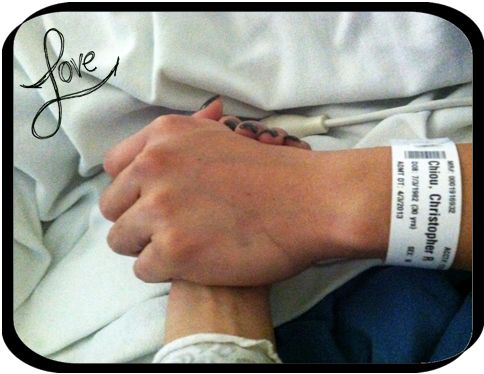 For me, I remember first trying to leave my wife out of the situation, believing being tough meant being a lone ranger; in reality, there really is no such thing as a ‘lone ranger’, even the Lone Ranger needed help (from Tonto). When I realized that the diagnosis was a grim one, I had to telephone my wife to have her by my side when I received the diagnosis. When I was waking up from my anesthesia after my 16-hour surgery, the first person I apparently called for was my older sister. When I was transferred to the ICU I remember holding my younger sister’s hand. My mother spent every night with me in my month and a half long stay in the hospital.
Why do I tell you this? Why is this relevant? I am like anyone else, and when the chips were down and I was shoved into a corner, I instinctively called for loved ones. Like I said, I am like everyone else; my nature to want loved ones by as I faced difficult situations is an instinct that we all share. I then thought of the idea of love, and its role in my ordeal: I realized that love not only got me a diagnosis, but it has also helped me through my recovery. The neurologist who diagnosed me reached his conclusion out of love; love for the art and skill of his profession. I was promptly seen at the University of Michigan because those who loved me quickly called and found the top neurosurgeon in the area. Every card, every visit, which brightened my day was done out of love.
With health issues like epidermoid brain tumors, we all need loved ones to help us traverse this terrain. Whether you are a ‘wait and watch’ patient or have upcoming surgery scheduled, the idea of love is how we get through this. Even though the thought of love may immediately place your mind in the realm of the traditional sense of the word, love can come in many forms; yes love of a fellow human is the more ‘traditional’ thinking behind the emotion, but we can (and do) love more than just people—we love places, arts, and professions too.
I do not tell you this to tell you how lucky I am to have those around me who love me, but to remind you that every relationship you forge, every loved one is a person you should cherish. It’s easy to be with a loved one during times of joy, but remember it is those same people that will also be there when you are down.
Today I had the pleasure of reading a post by a fellow EBTS member. The post discussed frustrations she had with her Neurosurgeon. This post generated much response, and garnered many replies. I must admit that my initial emotion was frustration…frustration with the minimization by this Neurosurgeon, frustration with the lack of the ability of this clinician to portray his thoughts, and empathy for her frustration in dealing with this condition. I will share her post with you below:
Errrrgh. . .another visit to my (neuro) Ophthalmologist yesterday. Third one in the last 6 months. Lovely man except for one thing. His need to assure me that I am very fortunate that I do not have a malignant tumor, that I shouldn’t really use the term tumor because that sounds more frightening than what it actually is, and that really all “it” is, is a growth and you can get growths anywhere! Then he says we are just keeping an eye on this because of the proximity of it to the brainstem. . .I am a watch and wait. My Epidermoid is around my brain stem causing many symptoms which I am treated for. Three surgeons have said they do not want to operate because the risks of permanent damage currently outweigh the symptoms I live with at this time. I am fine with that! But what I don’t get is why so many medical professionals downplay the Epidermoid like its nothing to fuss about and don’t call it a tumor. . .sorry just feeling frustrated.
My frustration turned to anger with subsequent reads; anger that this brain tumor is being treated this way. Now that I have had time to reflect with a cooler head about my reaction, I’ve come to realize that the emotion, frustration, plays a major role in dealings with this condition.
To truly understand the topic of frustration, it’s necessary first to give you my definition of it. In my eyes frustration is a deep seeded emotion; this is in contrast to an annoyance. These terms are sometimes mistakenly used interchangeably.
 While someone taking the last parking space in front of you may be a frustrating experience, I think of it more of an annoyance than a frustration. To me, living with a brain tumor inside your head and having your trusted physician trivialize the condition is frustrating.
I would be remiss if I mentioned frustration and did not interject my experience with the emotion: having been on the path to becoming an Attending physician (in medicine, there is a hierarchy to becoming a physician: this hierarchy is ordered medical student, resident physician, and attending physician. I was diagnosed with this brain tumor near the end of my residency). Then having this ‘path’ interrupted by the diagnosis of an Epidermoid Brain Tumor, becoming physically disabled overnight (as I once explained to my friend) has put me through many frustrations. These frustrations varied from fumbling with paper straw covers, to being viewed as incompetent by patients due to my poor physical and verbal ability.
The key to dealing with these frustrations is to focus instead on the positive and not to dwell on the negative. In my case, if I were to contemplate all of the frustrating factors that accompany my condition, I would no doubt spiral into a crippling depression. In fact, many around me have said, “Chris, if I were in your shoes I would become depressed.” A number of psychological and psychiatric professionals routinely screen me for depression, asking about my sleep and appetite and general mood. My wife, worried about my mental state, once told me, “If you keep bottling up your frustrations, there will come a time when it all boils over and spills out.” My response was that I was not ‘bottling up’ or ‘ignoring’ these frustrations; I instead chose to focus on aspects of my condition that did not frustrate me, and actually brought me hope.
I am not a daily meditator, but you are taught to try and ‘clear your mind’ when you meditate. “What are you seeing when you close your eyes [to meditate]?” my father, an avid and expert meditator once asked me (at the time I was trying to leech off his knowledge with meditation). At first, my response was that I would try and picture a tranquil mountaintop. (I was impressed with my answer and thought it was a clever way to clear my mind). My father’s response surprised me, “Mountaintops are something, remember you’re trying to clear you mind. Try instead to imagine a clear blue sky.” Furthermore, he taught me that thoughts may manifest as clouds coming through this sky. “Do not ignore these clouds,” he told me, “instead it’s important that you acknowledge them, but then let them pass.” He went on, “as you become more adept at meditation, these clouds will appear less and less.” What does this have to do with frustration? If you think of these frustrations as clouds that can only hurt you, then it’s important to acknowledge them but then to let them pass. In this case, yes there are people who minimize what you are going through, but remember that only you truly know what you are going through and that in the end, it does not matter what others say about your condition, what matters is how you let it affect you.
 In applying for medical school one of the most frequently asked questions on the interview trails is, “What do you want to do in medicine?” While the interviewers know that there are countless responses to this question including answers like: “I hope to become a surgeon,” or “I would like to work in an under-served community” the answer that is often sought by these interviewers is “I would like to be heavily involved in research.” These interviewers realize the importance of research. he interviewees have come to realize this and make it part of their standard response, even though in reality only a small percentage of physicians are actively involved in research.
I must admit that when I was asked this, I ‘towed the party line’ and would make sure to include ‘research’ in my response. I was not being completely dishonest with this answer, as the idea of taking part in research studies intrigued me and I did hope it to be part of my career in medicine. Where I may have been misleading though is the amount I wished to delve into research; if one’s career in medicine could be broken down into percentages, many of these interviewers would like research to be 30- 40% of one’s medical career where in reality for many, besides the required residency research project, research only encompasses 5- 10% of their career. This is only a generalization; thankfully, there are many physicians that devote most of their time to research.
But now that I’ve become older (and hopefully wiser) I have come to realize why the response of ‘research’ is so sought after; in medicine, research is what drives innovation and change. Without research we wouldn’t be nearly as knowledgeable as we are in topics like Heart Disease and Cancer. In fact, without research driving the progress of medicine, we would likely still be in the Dark Ages of medicine, with life expectancies in the 30s and preventable diseases like polio ravaging the population. Much of medicine is reactionary: if someone presents with a heart attack, steps are taken to identify the blockage and to relieve it; if a person were found to have cancer, medications (and sometimes radiotherapy) is given in hopes of hitting the cancerous cells. While both of these actions are vital to the care of these patients, they are both reactions.
Research takes a proactive approach – instead of fighting these diseases and conditions, isn’t it more rational to prevent them from occurring? Perhaps my training in Family Medicine biases my opinion, but I’d like to believe that the thought that ‘an ounce of prevention is worth a pound of cure’ is a widely accepted axiom. In my eyes, research follows this approach, leading the cutting edge of medicine, preaching a proactive approach rather than reaction.
When I was asked to write for the Epidermoid Brain Tumor Society (EBTS) I immediately jumped at the idea. Even though I was not a member, I had followed the group ever since my diagnosis and surgery. Their leadership especially impressed me: both Linda Frevert and Fay Powell, besides being incredibly kind, were instrumental in my decision to write for them. They have been so supportive and positive from the beginning.
As I have become more involved with the EBTS, I have been able to witness EBTS’s involvement in research. Early research surveys involved members at the beginning of organization and more recently an international member conducted a study with voluntary EBTS member participants which will further the knowledge and awareness of epidermoid brain tumors and our struggles with them.The study will be public this fall 2015.
Perhaps writing for the EBTS is my own way of contributing to medical progress.
*** Although there are no current research studies for epidermoid brain tumors, EBTS strongly urges members to voluntarily have tissue saved from surgery for future research.
We all like to think of ourselves as someone who works alone, a lone ranger. In fact, the term ‘lone ranger’ comes from a popular television series, based on a novel, in the 1950’s. Now, calling someone a lone ranger is synonymous with deeming them as someone who needs little or no help; someone who is completely self-sufficient. What people often forget is that the Lone Ranger needed the help of Tonto. I tell you this because it highlights the fact that everyone needs help; no one gets where they are without it.
 In my current condition, I’ve come to realize the importance of the aid of others. As physicians, we are often presented with cases that are beyond the scope of our skill set: at that time we ask for ‘help’ from consultants and specialists. No matter what branch of medicine, there are always times in which a consultation is needed: for example, if a 50 year-old woman with a history of urinary problems goes to her Urologist’s office for these urinary problems, but reveals that she has been coughing up significant amounts of blood; the Urologist would say, “You should be seen for that in the Emergency Department (ED).” The ED physician, after evaluating the patient, might enlist the expertise of a specialist, a Gastroenterologist. The Gastroenterologist might in turn, need the help of the patient’s Family Doctor to manage her high blood pressure or diabetes. My point in this convoluted scenario is that everyone in medicine needs help; the ‘lone ranger’ is an antiquated notion that is simply not realistic. This idea, I’ve realized, goes beyond the practice of medicine. We all need help.
Before my ordeal, I was always reluctant to ask for help. I aspired to be a ‘lone ranger’. In fact, I have mentioned before that I initially began my training in the specialty of Emergency Medicine (EM). I then switched to Family Medicine after one year of EM training. I have many reasons for this switch, but one of the main reasons is that when I entered into Emergency Medicine, I was hoping to be in a specialty of medicine that required little assistance from others. After being in the ED I realized this wasn’t the case: actually most cases required the aid of others. This trait of mine became magnified immediately after my surgery, as I hated the idea of asking for help. Even asking my assigned nurse for medications for pain was difficult for me. After my discharge I continued to be reluctant to ask for help. Not only did I still have my lone ranger mentality, but also I viewed the acceptance of help as an exposure of my weakness. I feared that accepting help put my disabilities on display.
Thankfully, time has shown me the error of my ways: I now have no issue in asking for help. This can be as simple as allowing someone to hold a door for me (where every instinct in my body tells me to open doors for others) or as complex as accepting help in returning to work. It is called ‘help’ for a reason; this act is in service of another.
The scale of this might differ: a person helping someone cross the street might ‘help’ on a smaller scale than Martin Luther King, Jr. uniting a whole race. To me, help is help, whether the act is a big or small one. In this example, I see both as reaching in the same areas of their heart to help regardless of the scale, I’ve realized that no one gets where they are without some help. All people who achieve success on any level have great people behind them. The help I ask for might seem minor, but my acceptance of help in these instances signifies my willingness for assistance in other grander issues.
We all need help to achieve our goals. Great people accomplish great things only with the help of those around them. Have you accepted the fact that you sometimes need help?
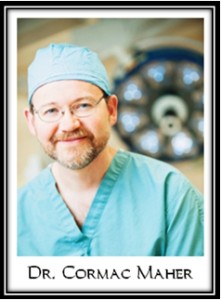 This past month I had the pleasure of corresponding with a very prominent neurosurgeon. Dr. Cormac Maher specializes in skull base tumors, often the location for Epidermoid Tumors. In fact, in full disclosure, he is the Neurosurgeon who operated on me. To be exact he is a Pediatric Neurosurgeon, but when I saw one of the head adult Neurosurgeons at the University of Michigan, he told me (regarding my tumor) “Chris, I am going to have one of my colleagues, Dr. Maher a Pediatric Neurosurgeon, see you. To be honest, he is much more experienced than I in this location. If it were my son I’d want him to see Dr. Maher.”
Neurosurgery is an amazing field; one that not only requires exact precision, but also one that demands an incredible amount of time and devotion. Knowing this, I was very grateful that Dr. Maher would take time out of his busy schedule to answer my questions. This is what I asked him:
CC: First off, Dr. Maher, I wanted to thank you for taking the time out of your day to answer these questions.
Are there locations that are more common for you to see?
CM: The most common location that I see are lesions located just to the side of the brainstem, wedged in the “CPA” or cerebellopontine angle.
CC: For patients whom which the wait and watch alternative is taken, are there specific intervals with which you monitor the tumors?
CM: I think the proper follow-up interval will depend on patient-specific factors such as the age of the patient, the presence of any symptoms, and the size and location of the epidermoid. I would follow larger lesions with much more frequent scanning than tiny lesions. I would also follow with more frequent scanning if I thought that any neurological structures such as cranial nerves would be in jeopardy if the lesion grew. Most importantly, I would monitor very closely if the lesion was threatening to obstruct the flow of cerebrospinal fluid pathways, possibly resulting in hydrocephalus. Of course, if a lesion is very worrisome – either because of its location, size, or symptoms – we tend to offer surgery as a first line of treatment.
CC: What new surgical approaches you advocate?
CM: It really depends where the lesion is located. For some intraventricular lesions or lesions at the skull base, endoscopic removal has become more accepted as a first choice therapy. This has the advantage of a more minimal approach and a shorter hospital stay. For most epidermoid lesions, their location makes them less than ideal candidates for this sort of resection. If a more traditional craniotomy is required, microsurgical tools are improving all the time. Probably the most important advancement in the last 10 years with respect to any brain lesion resection surgery has been the intraoperative MRI scanner. This tool allows us to examine the brain for any residual lesional tissue even while the operation is still in progress. The identification of residual during the operation increases the likelihood that we can achieve a total removal.
CC: What do you warn patients regarding possible adverse effects of the surgery?
CM: The size and location of the lesion will determine the amount and type of risk involved. The most dangerous lesions are usually located near the brain-stem or cranial nerves. Larger tumors are generally more difficult to remove than smaller ones. I try to tailor my preoperative risk discussion to the patient’s particular situation as best as possible.
CC: With regards to post-op complications, we have had many members that worry about meningitis and/or infections of the wound, are there steps they can take to prevent these?
CM: Most surgical infections are the result of bacterial organisms that are introduced at the time of surgery. All surgeons administer antibiotics just before they start the operation and that is generally thought to be helpful. Obviously, it is important to maintain a sterile environment during the operation. Once the operation is over, unfortunately, there is very little to be done that can decrease the odds of infection beyond common sense tactics such as keeping the wound clean. Some surgeons (including me) will place patients on antibiotics for a short time after surgery but this has never been proven to be helpful at prevention of infection – even after several large studies have attempted to study the practice.
CC: Thank you again Dr. Maher for both your time and your expertise.
One of the aspects of my work that always brightens my day is being able to see children. The only downside of having encounters with children is that they are often in distress (thus the reason for their visit). But many visits are ‘well child’ visits: visits where developmental milestones are assessed and vaccinations are given. These visits are typically filled with a smiling child’s face (that is until ‘the shots’ are given).
These highs come with the occasional low; in fact, since my return, I have only come close to crying once while in a patient room. This came after a six year-old girl told us that her mother’s boyfriend had sexually abused her. I hate seeing a child in any sort of distress- my heart sinks whenever I enter the room of a pediatric patient who is clearly sick.
Why do they give us so much joy? The scientific answer is that we’re designed to feel that way. It benefits our survival to think of children as precious. In evolutionary terms, loving them as we do causes us to protect them from any harm, leading to a propagation of us as a species. My superficial answer is that I see my sons (aged 8 and 2) in every pediatric patient. However, not only did I feel this way before the birth of my children, there are also countless others who do not or will not have children; thus my argument of seeing our children in others is debunked.
When I reflect on it more deeply, I realize it’s the honesty of children that I truly treasure. Kids will tell you what is on their mind; call it naiveté, but unlike us adults, they have yet to go through the long process of becoming an adult and being taught to censor many of their thoughts or words. This honesty can also be thought of as pureness. In philosophy there is a never-ending debate over our inherent values: one side believes us to be virtuous at the core, claiming that we are all born with inherent ‘good’ values. The opposite school of thought labels us as inherently ‘bad’; according to this theory we are all born with these hurtful tendencies. Personally, I subscribe to the former theory. I have never come across a trait that I disliked that couldn’t be traced back to a learned behavior. For example, I’ve yet to come across a racist whose beliefs spontaneously form. I can always trace their misguided beliefs to some experience that led them down this path. But regardless of where you stand on this debate, you’d be hard-pressed to find someone to argue against the pureness of a child’s mind. Whether or not their values are virtuous, they are always honest in what they say.
That brings me to the topic of today’s column. When Linda Frevert told me that many of the EBTS members are parents of children who have been diagnosed with Epidermoid Tumors, my heart sank: deep inside I knew that children were afflicted with this condition just as adults were, but I had been somewhat in denial about this reality. The thought of a child having to endure a surgery of the brain or even the diagnosis of an Epidermoid Tumor is hard to fathom. The good news of diagnosis at a young age is that children’s bodies are incredibly resilient and fantastic at recovery. I’m sure there is a plausible scientific explanation for this, but the conclusion is always the same: kids bounce back from injuries better than adults. I liken it to a sand castle. If a piece of your sand castle is taken (or broken) while you are building it, who cares? You can just get more sand and rebuild the affected area. But, if your sand castle is already completely built and your sibling decides to break off a chunk of it, it can prove very tough to rebuild.
But my despair turns to hope when hearing of children afflicted with this condition. Yes on the one hand it is horrible to think of a child with an Epidermoid Tumor. On the other hand, their diagnosis comes now when they are best equipped to recover. I often wonder how my recovery process would be different if I had been diagnosed at a young age. Thus, this is dedicated to any parents who have to endure this diagnosis in their child: just remember that there is nothing you could have done to prevent this- it is postulated that the tumor begins its formation in the womb. Also know that diagnosis now is better than later as your child’s body is equipped to recover from this and your child will heal. Sand castles broken while building it can be rebuilt, sometimes better than before.
I am a big fan of stand-up comedy, and Louis CK does a hilarious bit on children learning to lie: https://www.youtube.com/watch?v=msy__Gujljo
I graduated from college with a degree in Economics. This is where I came across the term, ‘externalities’. The official meaning of this is the cost or benefit a third party receives from an activity. For example, a negative externality of alcohol use is increased motor vehicle collisions as a result of impaired driving. For the purposes of this post, I see it as an unintended, uncontrollable consequence.
As I’ve mentioned I recently began shadowing physicians in the clinic, beginning my long journey to managing patients again. I usually follow with an Attending Physician, a physician that has already completed residency, but sometimes I will follow a senior level resident. Last week, I had the privilege of being matched up with a resident by the name of Abigail Urish (or Abbie). I met Abbie when she was an eager, bright-eyed intern. She is now a third year resident, elected chief, and ready to embark on her own in only a few short months. I have always admired her, not only for her obvious high intelligence and willingness to learn, but also for her optimistic disposition, finding the light in the dimmest of situations.
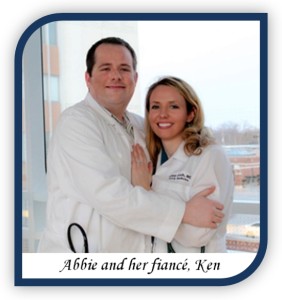 We entered the room for a patient encounter together. There are times when the moment you enter the patient’s room, you can sense that something’s amiss. Perhaps it is the look in the patient’s eyes, or maybe it is from the way they are sitting, or possibly a combination of factors, but when we entered her room both Abbie and I could sense her depressed mood.
I know I have written on the topic of depression several times before, but what Abbie told her was very poignant and struck a chord with me. During the encounter, the patient told us of several of the hardships she was enduring (i.e. loss of custody, a dispute with her child). Abbie was then faced with the daunting task of describing depression in less than the 15 minutes allotted for each visit. Abbie told her that, “Depression is a hard entity to treat, because unlike so much else in medicine, with Depression there are no blood tests or x-rays we can obtain to aid us in diagnosis. Also, response to treatment is so variable and really depends on the individual patient. My thought is that Depression is very much related to how we react or internalize external situations. There are some who face incredible hardships, yet are able to see the silver lining in any situation. You just told me about some very hard events in your life, but you also mentioned some bright happenings too. Unfortunately, someone who suffers from Depression zeroes in on the bad or tough situations. Just to give you an example, if someone takes a test with 100 questions and gets 99 out of 100 right, a depressed person will only remember the one question they missed as opposed to the 99 they got correct. The medications and therapies we prescribe can only serve to help with this outlook. We can’t control much of what happens to us, but what we can change is how we react.”
The more I thought about it, the more I realized how right Abbie was. We as a society are obsessed with trying to control or modify situations that are thought of as immutable. Examples of this are littered throughout medicine: risk factors for developing a disease are generally divided into modifiable and non-modifiable risks. The idea of attempting to alter these modifiable risk factors is drilled into our heads from the first day of medical school. I am by no means saying that these external, changeable factors should be ignored. For example, stopping someone’s smoking habit can have repercussions throughout their life. But I believe that too much of our focus is placed on factors beyond our control. All of us receive a ‘raw deal’ at some point in our lives, and while we cannot control many of these situations, we can change how we face these challenges.